Words and Sentences, Fluency, gestures and Signs
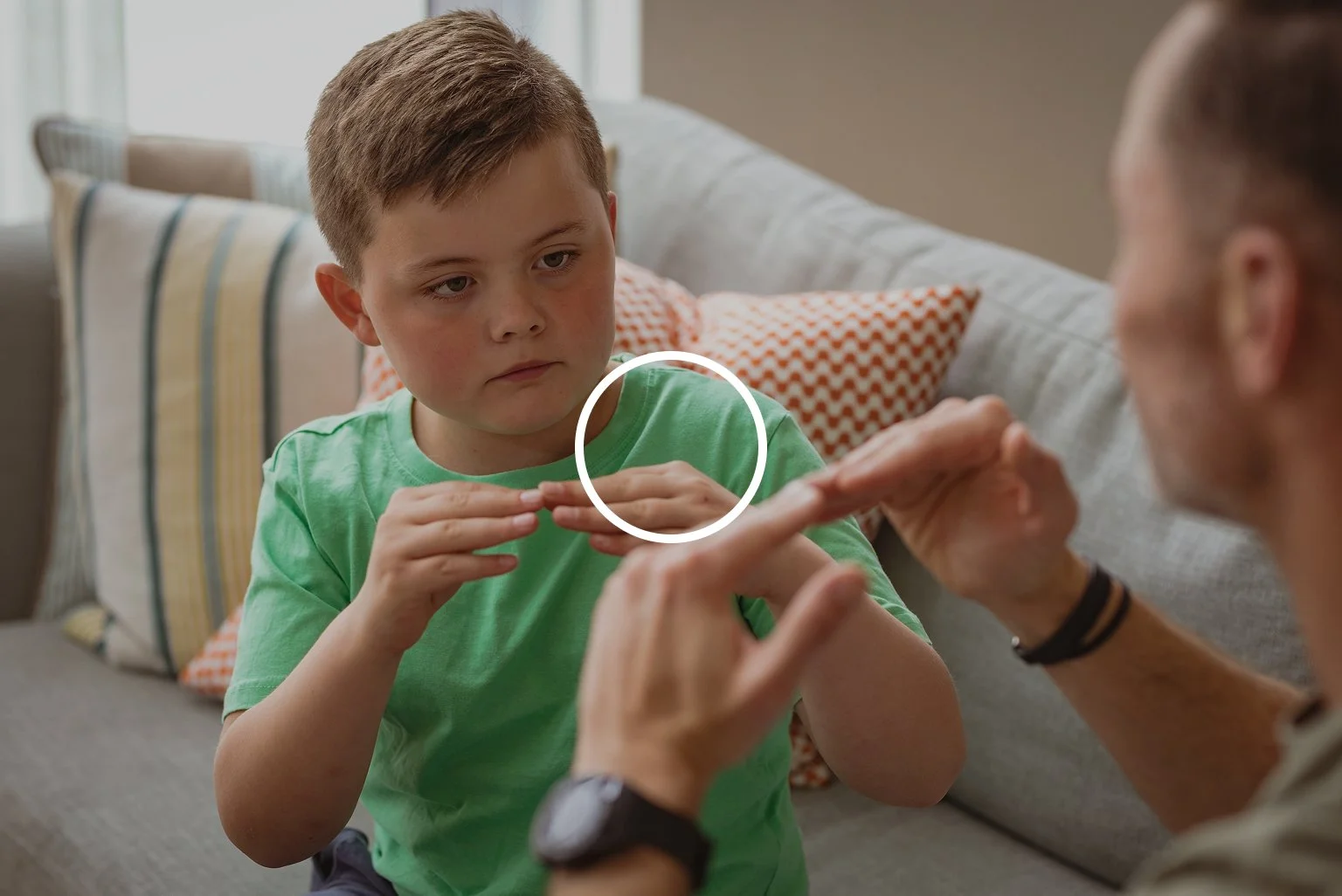
For English or French subtitles, click the ⚙️ settings icon and select CC/subtitles.
Words and sentences - repeating and recasting
By clearly responding to your child’s signals, speaking when invited, stopping when they need us to, you will notice them increasingly using their face watching in and outside of quiet times. This in turn will help you to know when to speak throughout the day and when to be quiet. You will find that you are continuing with the natural skills you have always been using we have just adjusted the timing so that your child is tuning in to the elements that are specifically supportive for them. They will be self-sourcing and shaping where to go next
What ever your child is seeking, their signal will draw from you what they need - gesture, sign, word, phrases, sentences in the situation that you happen to be in. The quiet times are supporting their regulation, co-ordination, concentration and understanding for increasing periods of time with each of these skills extending outside the quiet times throughout the day at home, in different situations and places and with different people.
You will find that outside of the quiet times, you are not speaking when they are not face watching, matching what you have to say with when they are ready to tune in to it and keeping what you have to say to ‘chunks’ of information with pauses at a calmer rate so that they do not have to ‘chase’ rapid speech.
With each quiet time, the more they feel understood and the more time they are given to organise, plan and articulate what they wish to say allowing precision and co-ordination in relation to their body, tongue and voice.
By us nodding and saying/gesturing the intended word (recasting them) we are reinforcing/praising them for successfully trying, showing we understand and clarifying on our bodies/lips how to shape the action, word sentence even more clearly. We stay in the moment and don’t ‘add on’ because we want them to feel their success (proprioceptive feedback).
By us repeating/recasting the last word we are keeping our contribution short and regulated, they will mirror this ‘slower rate’ allowing for fluency build up .
Remember each child does not need to repeat anything we say
If we want to we can organise their world so that certain vocabulary is used time and time again so that the vocabulary becomes very familiar .
We are providing props to help them whilst keeping the interaction natural .
Rightly often the words that they are using will be unclear e.g. they may say 'aeey on ou' (daddy's gone out) All children 'simplify' sounds when they are first learning them. Each time we recast their word (when we have waited for face watching) we are helping them to develop their clarity of speech.
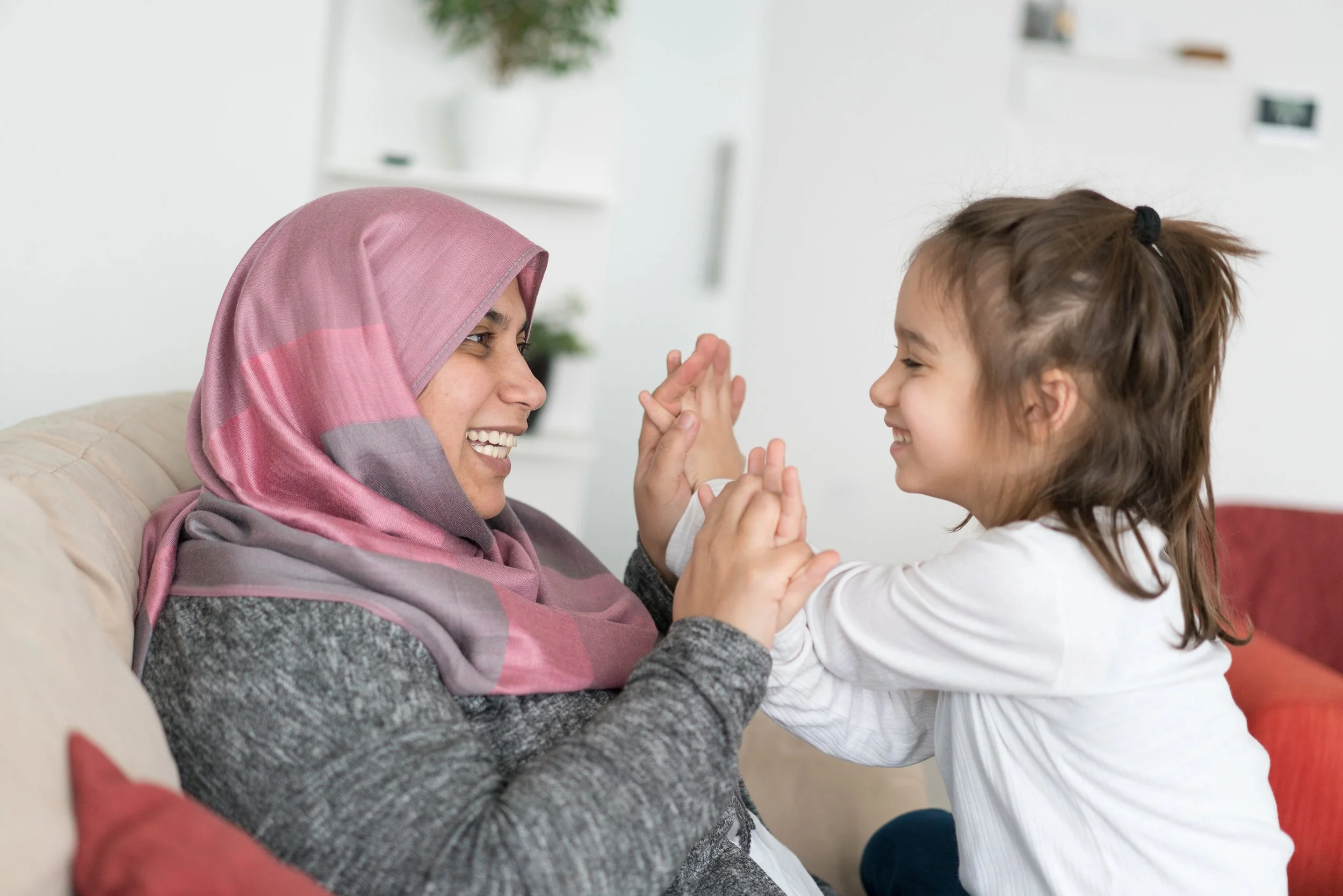
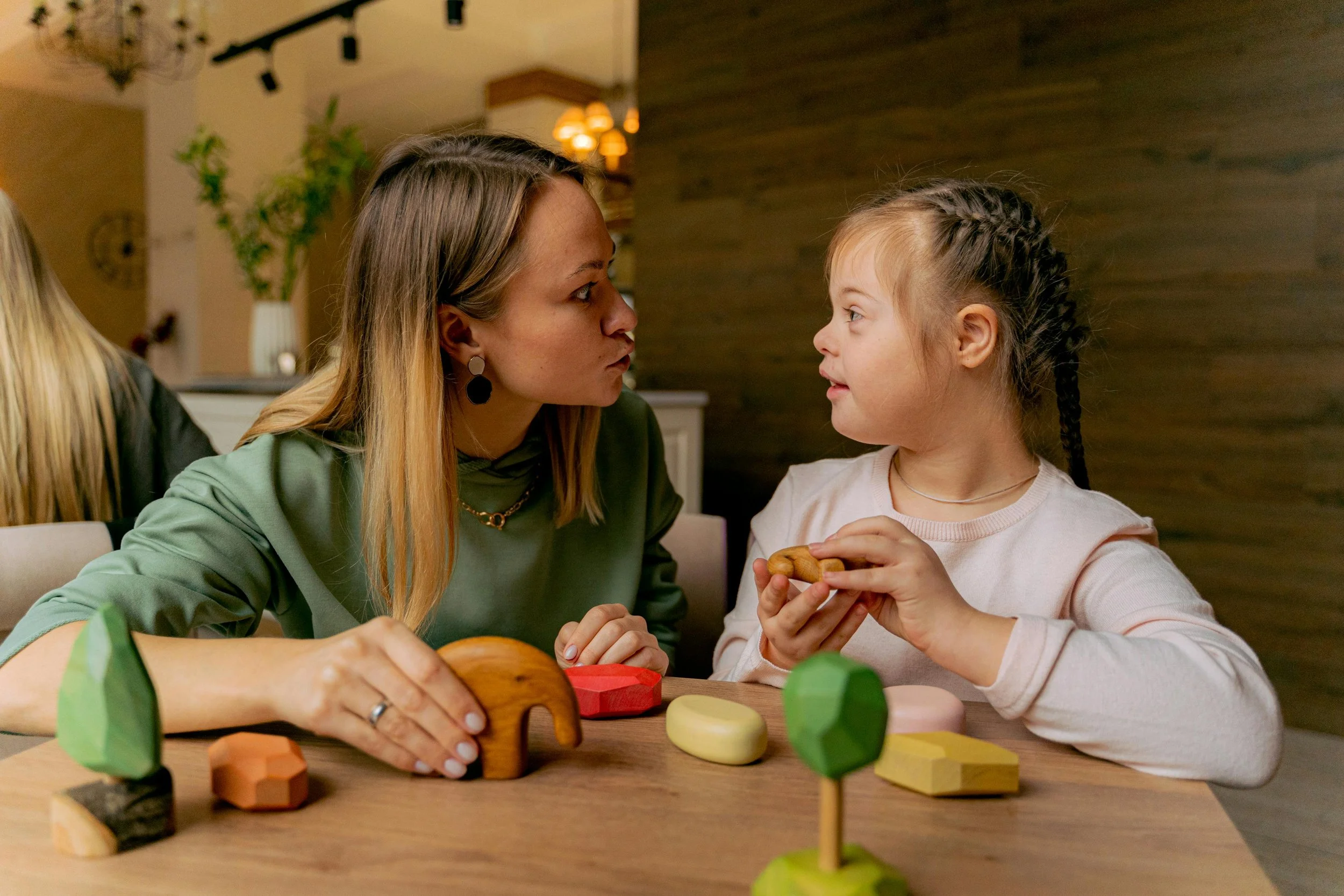
We keep face watching at the heart of everything we do. You will notice that having been supported specifically in tuning in to voice, they will start to be able to tune in to what we are saying even when they are not face watching, drawing language from everywhere as well as from us.
But, don’t be tempted to drop waiting for face watching. Keep waiting at home so that they are able outside of home to use their face watching to manage others.
People will automatically move to and engage with those that face watch and smile. By keeping daily quiet times and throughout the day respecting our child’s signal of when to speak and when to stop, they will interact with others in the same way as they have developed their interaction with you.
Face watching shows that the child is in a regulated state.
Face watching is interpreted by others as confidence.
Continued Reading: