Regulation and co-regulation - a synergy that supports development throughout life.
Holding steady :
Like all mammals, as humans we are born dependent on others (Bowlby and Ainsworth). Usually our parents.
In order to survive, grow and become independent we need their care and safety whilst we try out and learn about the world and ourselves from our interactions and actions. Our loved ones are there to support us as we develop our own physiology i.e the smooth running of our own internal system e.g. brain, heart, liver, lungs, pancreas, finger tips senses etc; our body parts, our actions, interactions and thoughts.
We are also constantly receiving mechanical, chemical and electromagnetic energy from everything around us including every person in our vicinity. These energies are so subtle that they frequently cannot be detected by the human eye and can only be measured through electromyography. See more on safe spaces.
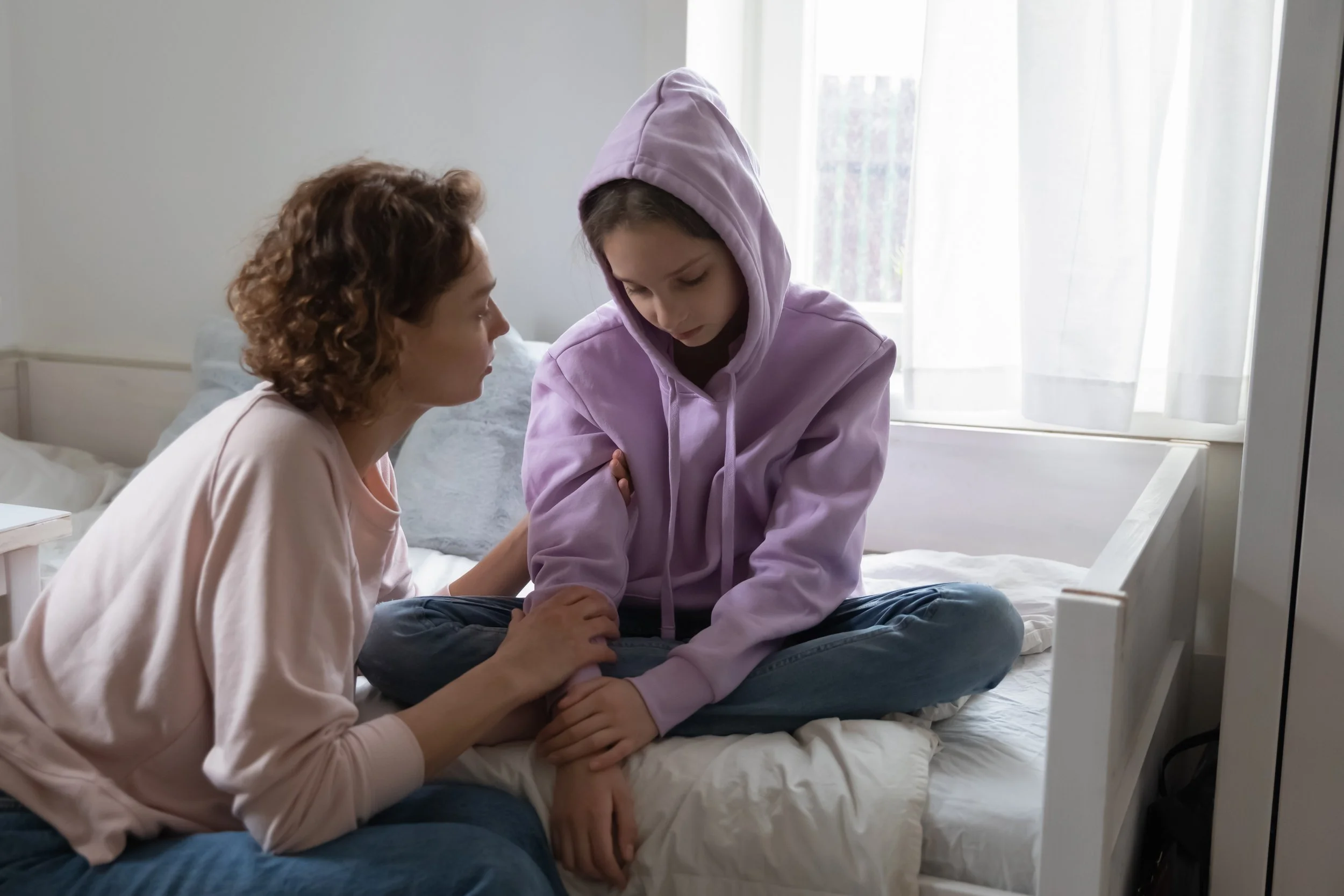
When a baby is first born, as carers we use our closeness (energy) to hold and comfort them. If we are at a distance, when they ‘alert us’ to show that they are for example : excited, hungry or cold, we move in to their space ‘proximity’, so that they can feel our energy/calming influence. Our body blocks out all the other energies around helping them to feel safe. The energy between us forms a sort of ‘safety bubble’.
By feeling, watching and seeing our signals that they are safe, they become calm (regulated), sometimes straightaway, sometimes over time . They have shown us what they need through their actions e.g. crying, wriggling and our response/actions e.g. proximity, smile, cuddle, food, blanket, have made them feel safe. They no longer feel hungry or cold, and feel safe through our protective smile and calming energy and actions.
It goes both ways, when they are calm, their energy affects our energy and feelings and we feel safe/calm. They regulate us - we co-regulate.
Being able to regulate ourselves starts from the moment we are conceived and settled in the womb. From the tiniest seed we start the complex process of growing, our mind and body constantly working together, organising and emerging from, building on and being influenced, by the stage before. Our system inside and out is re-balancing, regulating, stabilising, organising and adapting. The womb allowing us to grow in safety.
We then start coming out of the womb in to the world, where there will be many demands ‘challenging’ our internal balance, regulation and safety.
We cannot manage all of these new challenges on our own. We need help in selecting and managing each experience, gently adding it to our growing selves, bodies and actions.
We use the energy of our loved ones, our ‘Interpersonal neurobiology’ (Siegel) to filter and manage information from our new world, gradually building on our abilities - balancing, regulating, stabilising, organising and adapting.
We look for safety from our parents, signaling when we need support and showing when we are able and ready to take on new information. We make it clear when we are ready for stimulation and when we need quiet. We do this through our actions/energy, faces and vocalisations.
When we are overloaded by too much stimulation from the world we need other things to stop, to quiet. We look ‘inward’ to balance what we are already trying to do. We show that we need time and ,are not ready for anything else. We look away from others (Stern). We seek peace. Then, when we are feeling regulated, calm and organised we use our ‘social engagement system’ (Porges) watching for and showing signals of safety i.e we face watch, smile, and vocalise, our ear muscles adjusting to pick out human voice from background noise. See more on safe face.
Our first priority as mammals is to be constantly ready to respond to risk. Before we do anything, we check with those that can protect us that our environment is safe. That safety is conveyed through their energy, face and body. If they look and ‘feel’ calm, we know we are safe. If they don’t look and feel calm then we know to be alert to danger too.
In watching the face of our loved one, without knowing it and below the level of consciousness our face ‘mirrors’ theirs. If their face looks comfortable and relaxed and conveys ‘safety’, our face muscles mirror that ‘expression’ which in turn physiologically calms our heart rate (Porges), regulating us.
If their face looks ‘tense’ our face without us knowing will mirror that expression ‘reading’ it as an immediate ‘danger’ signal and our heart rate will increase in preparation for ‘flight’.
When calm (regulated), we are are able to experiment and explore and use our own skills taking on new things.
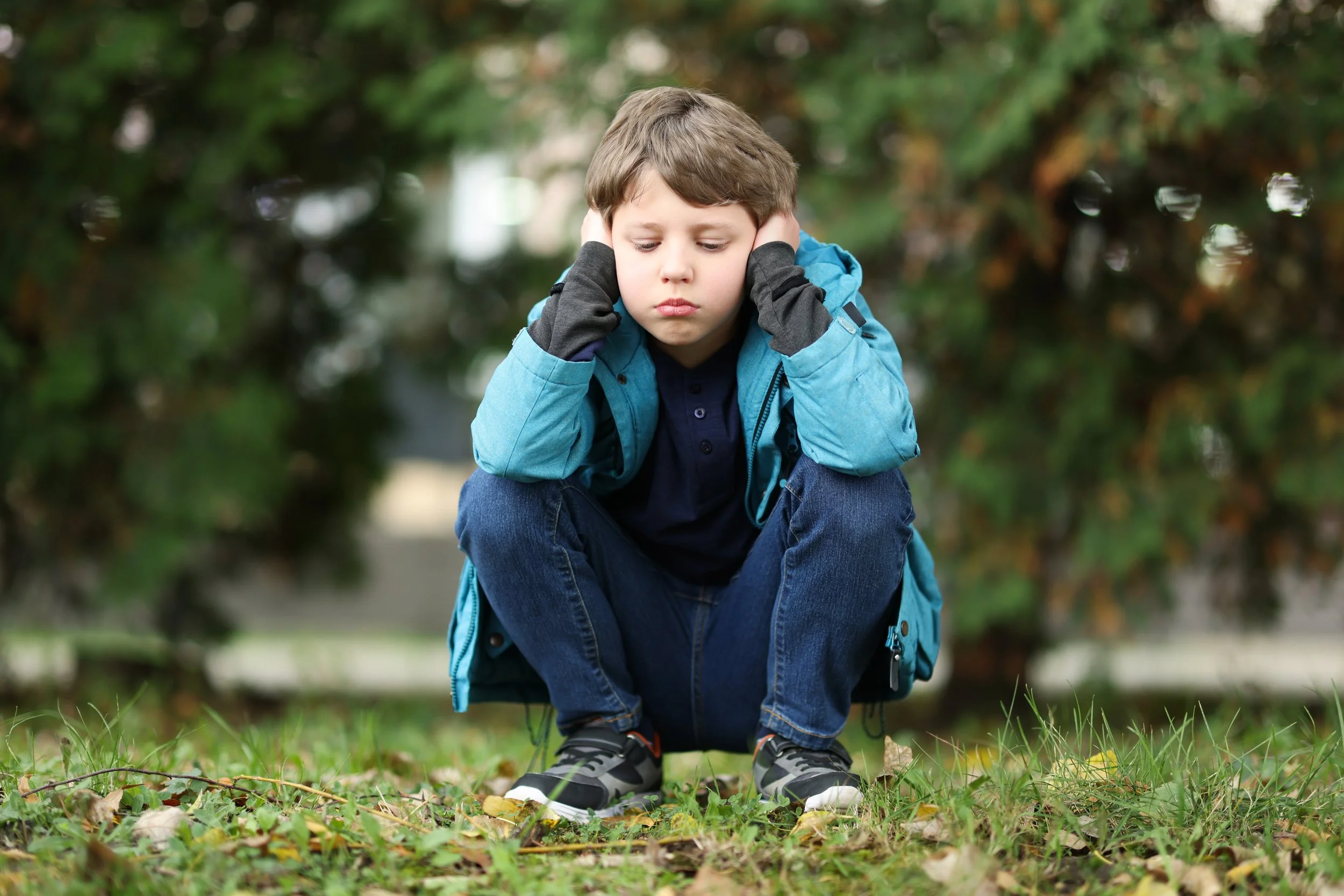
When we are dysregulated either because of something internal (feeling ill, tired,) or external (noise, busy, a face that is not welcoming) we potentially go in to fight, flight or shutdown.
Imagine that regulation i.e. the ability to organise ourselves inside and out is on a flexible continuum of 1-10, with us generally moving easily between :
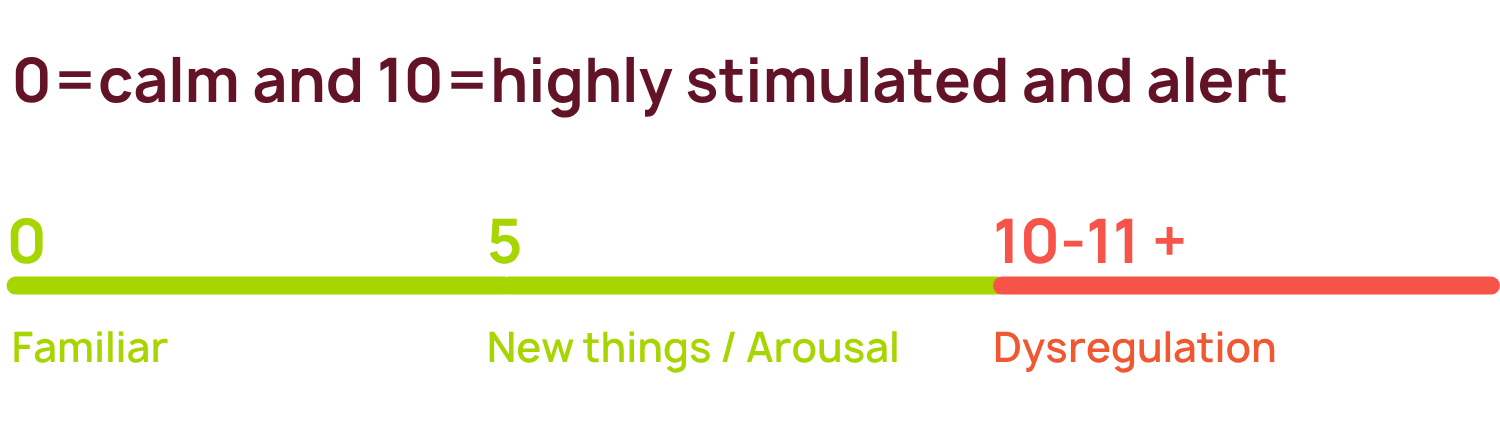
0-5 State of calm, doing things that we are really familiar with.
5-10 Alert and open to new things - our senses are amplified and aroused ready to learn and absorb
10+ We have are overstimulated/excited/overwhelmed and will find it difficult to organise our behaviours, actions and thinking
5-10 We feel the excitement of the unknown, hold ourselves steady, experience it and regulate ourselves back down the scale towards 5 in order to be calm ready, re-balance and then carry on exploring.
We are all moving up and down within this scale moment by moment.
As an infant everything we do is new and stimulating/exciting. We are learning to manage our own state, what is happening within us, and what is coming at us from outside.
The line between stimulation and overstimulation—between being alert and feeling overwhelmed—is a fine one.
In being new to the world, much of the time we become over-stimulated and slide in to the red. When we are in the red our system is overloaded and chaotic, beyond our control. When in this ‘dysregulated’ state we cannot experiment and explore.
This red is not negative. It is chaotic. A dysregulated state is natures useful way of letting us know when too much is being asked of us.
Our behaviour shows this ‘chaos’ . We become ‘reactive’, perhaps becoming hectic, rapid and loud and hitting out or we may ‘close down’ becoming silent and looking ‘tense’.
Our ‘energy’ naturally affects the energy of those around us (particularly those in proximity) and below the level of consciousness we potentially draw other people in to the same state (Schore 2001, Porges 2011) .
We can become overwhelmed because of what is going on around us (external) and we can become overwhelmed because of what is going on inside us (Internal). If we are tired, hungry, cold, or feeling poorly short term or long term our system will be on overload and we will feel and look ‘chaotic’ or ‘withdrawn’.
To begin with our parents use their proximity, energy and actions to support us in managing these frequent extreme human feelings and states.
As can be seen in the diagram below - moment by moment the regulation of the child is managed by the regulation of their loved one.
Below the level of consciousness: as parents we see the child interested/aroused (8) and mirror it (their face) momentarily, to show that we are in tune (understand it, attuned Schore 2001). We then deliberately draw our energy back down (4-7) regulate (purposefully misattune Schore 2001) to show that the ‘feeling’ is natural, all is ok and this is how and what we do to steady ourselves.
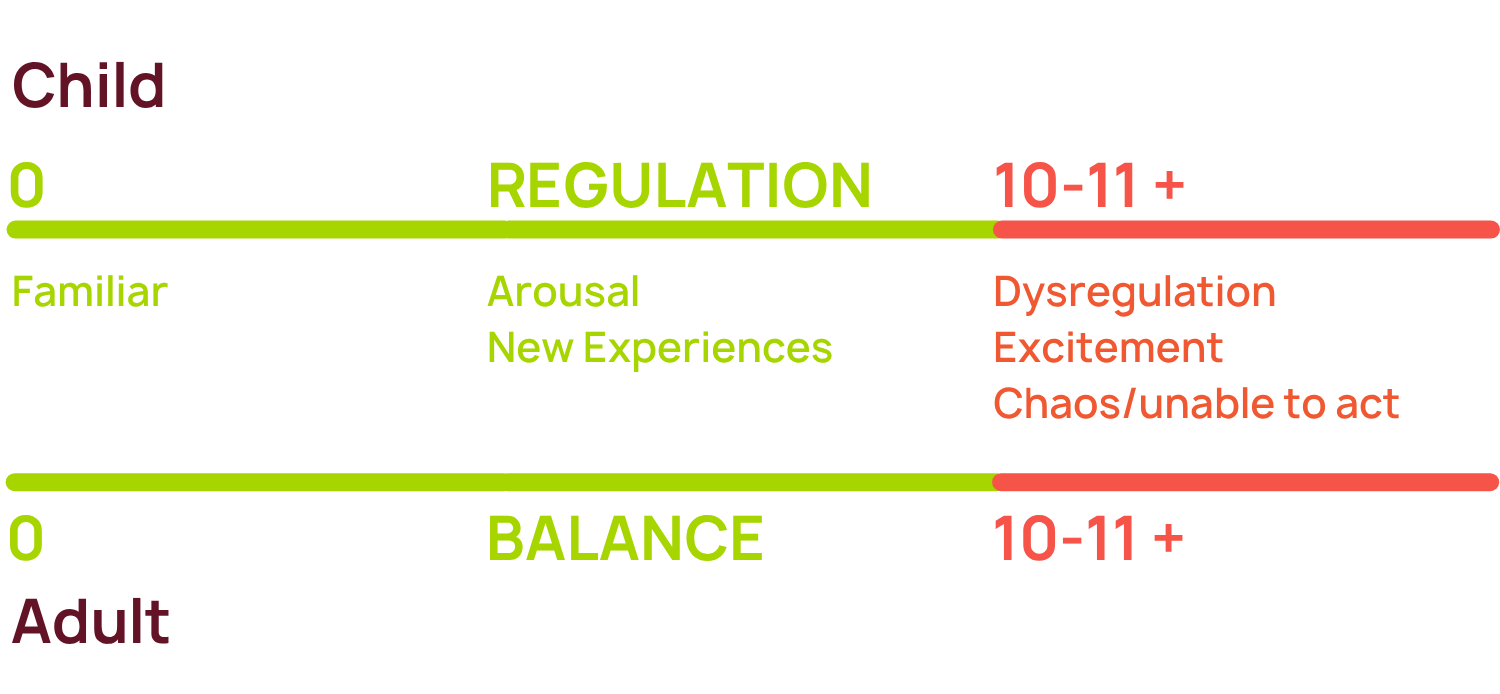
When in a chaotic state (11+) the chaos is visible in the child’s actions, exclamations and body. These behaviours show that they are seeking support.
By the adult mirroring the child’s face momentarily and then ‘purposefully mistuning’ and remaining calm, deliberately neutralising their facial expression (safe face - showing it’s ok) their magnetic energy provides support for the child to ease out of the chaos. The adult is showing that the rush of feeling that the child is experiencing is not something to be feared, that it is important to feel these feelings, natural and ok. In having rightly felt it, they are able to can manage it. By the adult becoming still, our energy holds the child safely through the experience and gives them time to steady themselves down out of the red.
They will start to face-watch when their system is out of the chaos. They will signal their regulation by face watching.
By experiencing their ability to have the extreme emotion, express it and manage it, they become increasingly able to feel (interoception - our nervous system’s monitoring of our bodily processes) and manage their emotions and actions. In this way they start to anticipate these feelings before they become overwhelming and to ‘internalise’ the skill in managing them without being dependent on their parents support in doing so. The adult’s closeness (proximity) and connection through energy (interpersonal neurobiology) develops regulation (safety inside and out) and independence. In this way each of us learns how to manage and let out our feelings when it is safe to do so.
what happens when they pull us in to the red!
Of course, frequently the child’s red pulls the adult’s in to the red (highest energy is likely to win) we mirror their face, their actions, their voice. All becomes chaos There is no feeling of safety.
In these situations, the adult will be feeling the ‘red’ and will need to ‘mask’ it. The old phrase of ‘fake it to make it’. We show we understand why they are feeling that way, mirroring their face (attuning) and then we calm ourselves (purposefully misattuning) so that in their chaotic state they can see a face of safety and an anchor to support themselves through the chaos and magenetise them in to regulation.
‘Good enough parenting’ (Winnicot) helps us to know that it is not possible to be managing our emotions and holding steady through our children’s periods in the red, all the time. But the more we can magnetise them in to the green, the less ‘red’ states happen. It is also essential for our children to have these red states to show us just how they are feeling.
It works both ways, if our child is calm, their energy calms ours, which in turn calms theirs (co-regulation).
Regulation: is our ability to appropriately and relatively fluidly balance the smooth running of our ‘system’ (physiology) and monitor and modulate our behaviour in response to demands from the social and physical environment. It underpins ‘healthy self-reliance’ and is the foundation for managing the challenges that are thrown at us through life. We carry on supporting ourselves as well as benefitting from regulation from others.
Face watching - supports our regulation because when we engage in eye-contact a feel good hormone or opiate (oxytocin -fonaghy) is released in the pre-frontal cortex of the brain, and our mirrored face muscles regulate our heart (face heart connection - Porges). We are literally receiving physiological feedback. This physiological reaction leads to us seeking more, patterning our actions and behaviours.
in developing a ‘Robust physiology’ we are able to move easily between varying states, maintain our own stability, co-regulate with others and accept or reject other influential factors.
Continued Reading: