Why proximity and stopping talking when they look away.
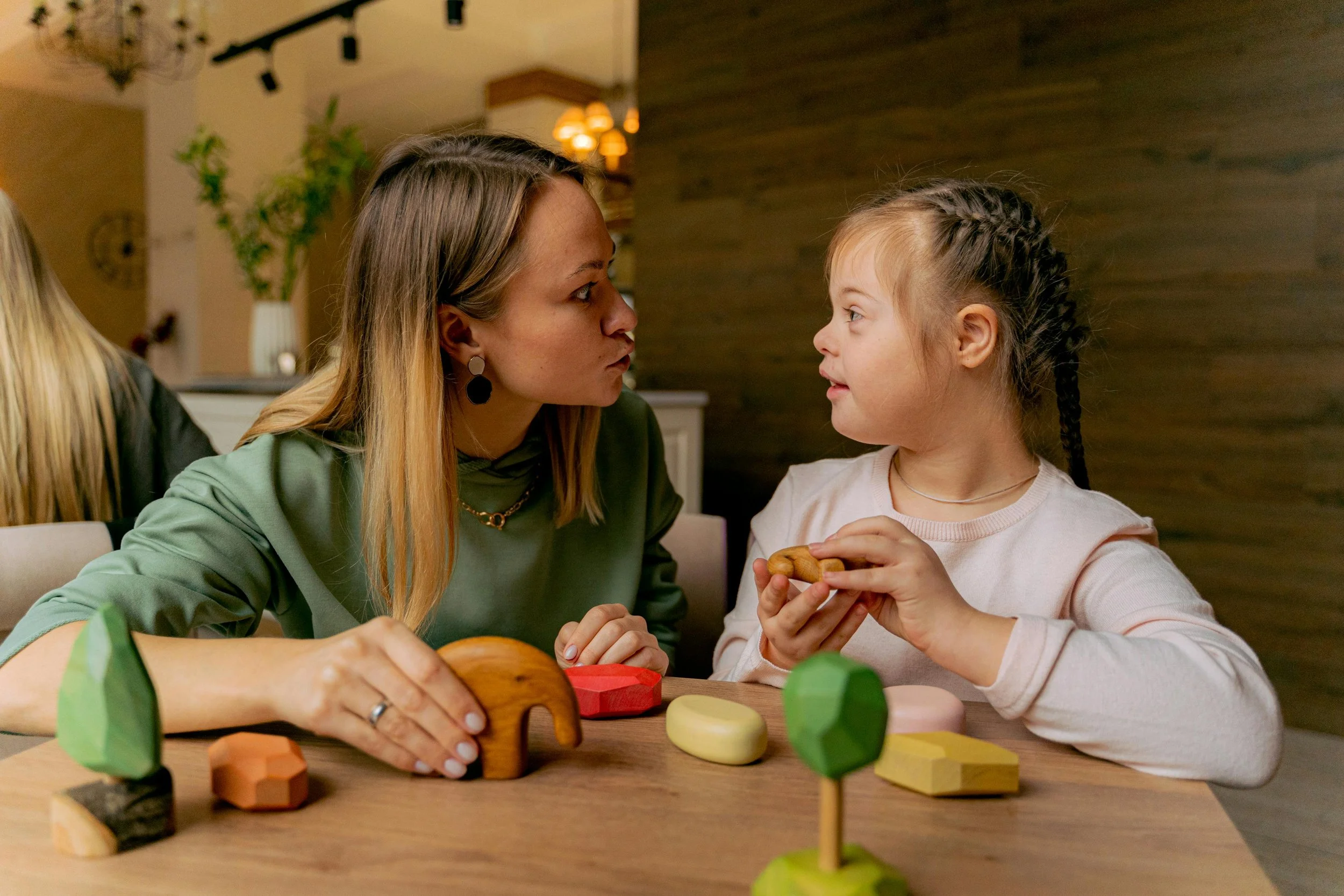
Proximity - Maintaining ‘attentive proximity’- being in the listening space lets the child know that they are safe and that you are completely focused on their ideas, and keeps them calm and comfortable. Sitting in proximity helps them to sequence their ideas and organise their thoughts.
Level and being opposite - Being at exactly the same height as the child – offers easy opportunity for face watching, body watching and lip reading and allows the child to feel and sense your interest and supportive participation.
Watching the child explore. Using silence- Observing – allows them to develop their concentration, attention and experimentation. They will stay and play and sequence their own ideas comforted by your being there. As they mature, so they will start to do exactly the same in your absence (internalise).
Silence - supports the child in trusting their own skills in exploring, allows them time to experiment with cause and effect - both with the toys and with their initiation with you, the adult (their communicative partner). It supports them in self regulating (calming themselves) and gives them time to organise and process their thoughts in association with the objects they are playing with without interference.
It ensures that the child is not overloaded and gives the adult time to watch and perfect their own timing/stimulation. The more they feel their regulation with you present, the more they can feel their regulated state in your absence (and manage it).
Waiting for child to face watch - When the child is ready for a comment/word/dialogue- They will look up and face watch to invite you.
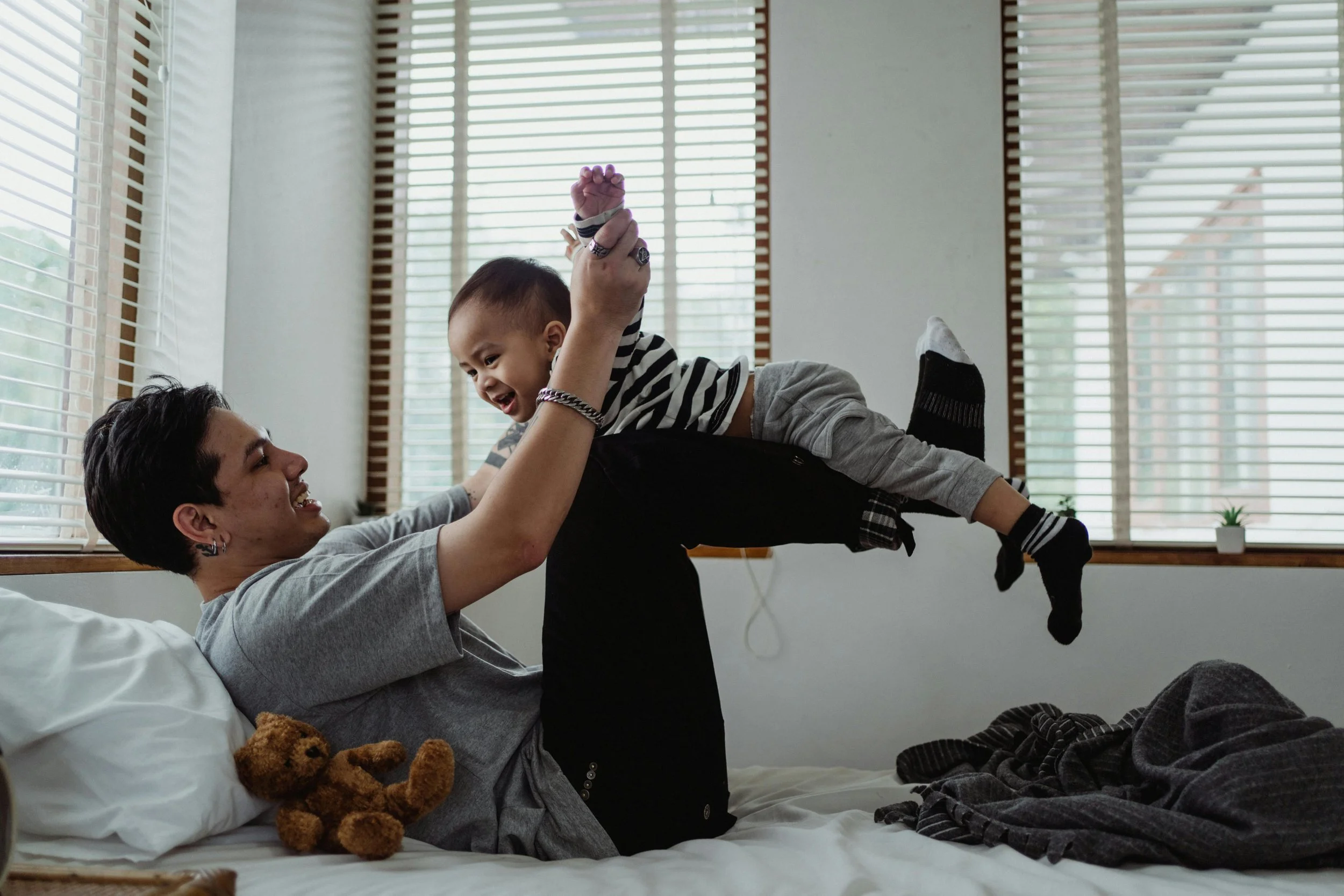
Lighting up, nodding - this shows that we are tuned in to them, watching, listening and ready to share. A gentle smiling face reinforces the child’s clear signal and regulates both hearts.
Saying/gesturing a word accompanys the smile, sharing a word that goes with what they are doing or the object in their hand,
Repeating the word you know they are trying to say when they are using vocalisations and their words are unclear.
Repeating the last word when they are using sentences to reinforce that you are listening and tuned in and enjoying the interaction. Repeating a word when they are saying a sentence that we cannot understand.
Repeating the last word or key word in the sentence if their sentence has been dysfluent.
Repeating the intention with a new word for the phrase if the phrase they have used in the moment doesn’t quite fit the situation recasting it e.g child ‘nice cup of coffee’ adult nodding, smiling, ‘juice’.
NB as the child engages in eye contact so oxytocin is released in the pre-frontal cortex of the brain - releasing a rush of feel-good hormones. This patterns the child to seek more. They start to feel that the adult is truly attentive. In looking at the adults affirmative face – the child feel safe (heart regulated) and carry’s on developing the connection.
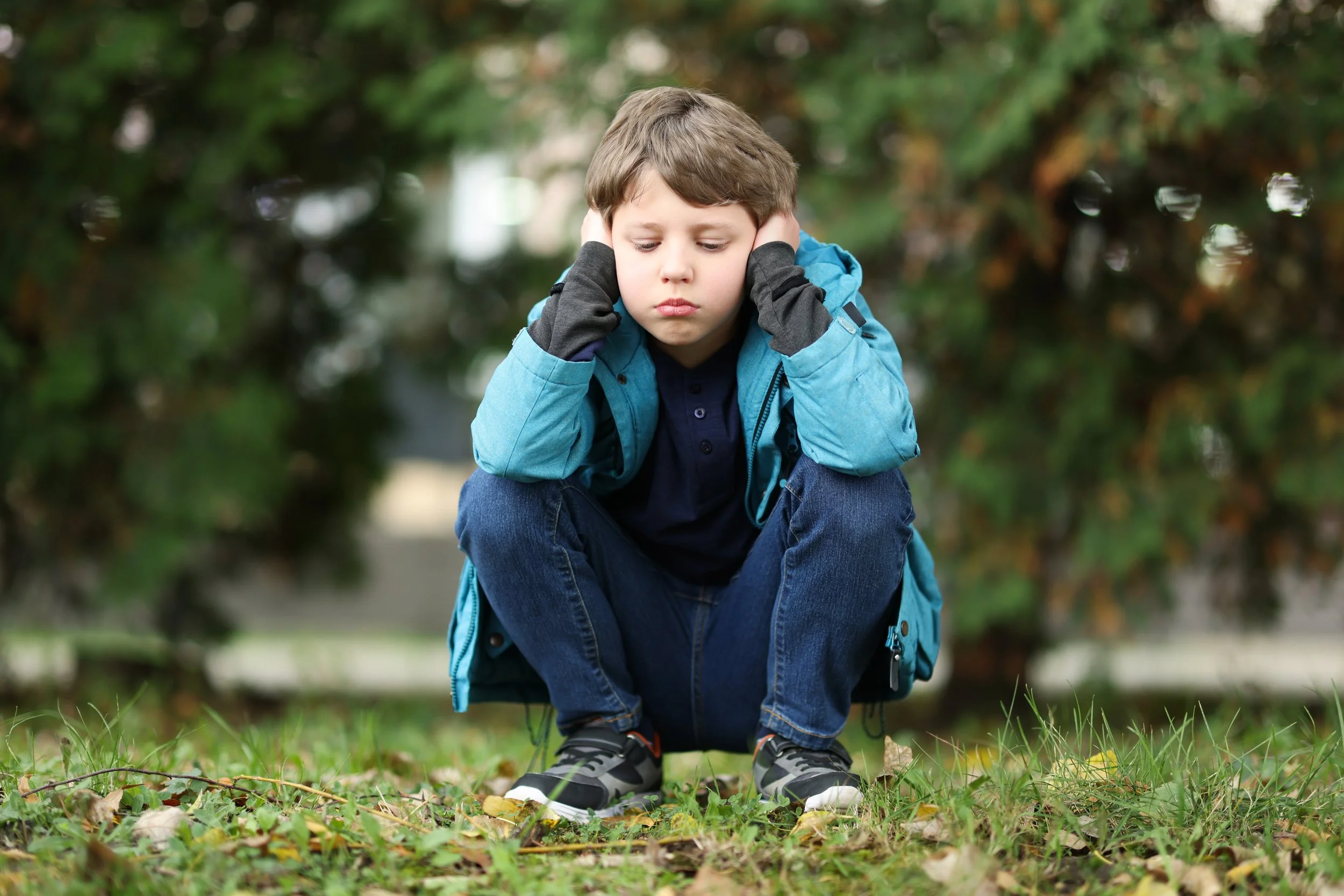
STOP talking – when they look away -The child needs to look away to manage their level of stimulation and regulate. When they look away they are saying – I’m getting over loaded – give me a moment of peace please.
By tuning in to when our child wants us to stop, so their face watching develops helping them to manage their self-regulatory state and other people’s (children and adults) interactions.
Repeating the last word (or significant word) of what they have said when they face watch:
Saying the word when the child invites you to speak supports your child in seeing that you are listening to and interested in their ideas and that you are understanding what they are telling you (with their actions, body or sounds/words). It also helps them to tune in and see exactly how the other person arranges their skills (all of us being unique in the way we do so) with them body, emotion and lip reading. We are also ‘modelling’ (demonstrating) how to tune in to, listen and affirm other peoples ideas.
With chatty children who may be unclear or dysfluent, we are also staying with one word repeat because it slows down the conversation, and the silence allows the child to take their time, organise their thoughts and articulators, feel their own ‘proprioceptive’*feedback and reduce the ‘competitive’ rate that other people are often talking at.
Self- talk (which doesn’t necessarily sound like words)
Children talk to themselves (often in a way that we cannot understand).
We use ‘talk’ for three main purposes. To talk to ourselves in order to organise, regulate, plan and think things through. We talk to others (social talk) to connect and share ideas and we use ‘internal talk’ as a more sophisticated means of both self talk and social talk.
Self-talk or thinking aloud is as essential as talking to someone (the brilliant Ukranian psychologist Vgotsky noted this many years ago). It is important not to interfere. If your child says something and doesn’t look at you – don’t answer them, they are not interested in your opinion or what you have to say and are not looking for your reinforcement. They are supporting themselves in thinking things through.
Wait for them to face watch. If they wish you to answer they will say it again and face watch. If they don’t look at you they do not wanting an answer.
Learning the two distinct external ways of using language is very important for them. Self talk is fundamental in our development of regulation, organisation of ideas, problem solving, perseverance, resilience and proprioceptive feedback
*proprioceptive feedback - is an unconscious knowledge , sense and perception of movements and positions of the body.
Continued Reading: