The Power of Play and Everyday experiences
Why through play?
Watching play helps us to know what each child is interested in and thinking about and what actions, words they are ready for.
Vgotsky noted that everything children go on to talk about is firstly seen through their actions and what they do with ‘things’ (play). Play is the opportunity for children to experiment - it is not necessarily related to ‘toys’ but is the opportunity to try out things in a safe environment.
The essential thing for children is that they have a safe place and ‘relationship’ in which to ‘have a go’ at something and in so doing, learn that they can have an impact on either an object or person or both.
Every time they try out something new their experience (both sensory, action and emotion) is loading their sensory, visual, action, thought memory. It is these memories that language and ‘words’ are built on.
A tiny child will enjoy poking fingers in things, exploring, what happens (can they feel something the other side, does their finger get stuck, can they see it etc) and if the adult is present, how that adult reacts. This leads them to either do it again or stop. Every new try adding to their knowledge, experience and memory.
Experimenting and having a go, trying something out, feeling sensory feedback, leads to more learning .
They will poke at something and then look to the adult to check that it is safe/ok to do so. By the adult nodding that it is safe and ok (nodding and smiling) the child will go on further in their exploring. A gentle head shake, or the adults face showing ‘ugh’, indicates that it’s not a good idea. This often stops that exploration with them moving on to something else.
We take many years to develop our skills in co-ordinating our bodies, actions and play ideas (thoughts) with objects, people and toys.
Having a go …….. a chance to ‘explore’ makes all the difference. A child may be trying to put their coat on ‘upside down’ - co-ordinating their body with the complex business of getting the coat and arms the right way. This takes time, concentration and co-ordination.
You will notice that they are interested in things that stimulate their senses and may have a preference for somethings over others in relation to their hearing, sight, touch, smell, taste balance and movement.
They may use real objects –pots, pans etc and copy what they have seen the adult do at home. Then they may start to relate these objects to themselves/us/teddy/dolly and carry out a sequence that reflects what they have seen at home.
They need to explore and manipulate objects and toys (learning to co-ordinate their bodies, arms, legs, pincer grip to pick things up) before they may use them in the way we think they should.
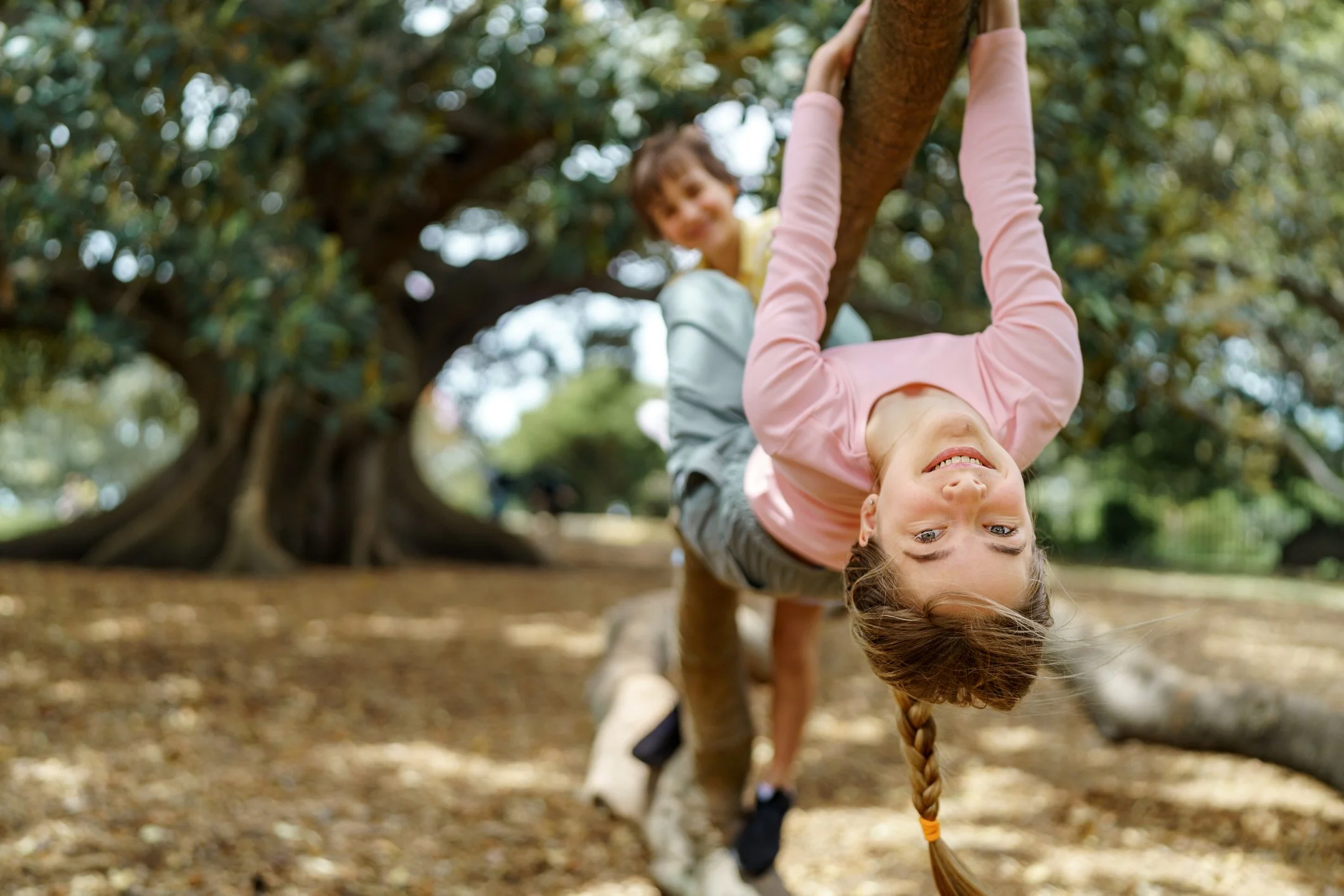
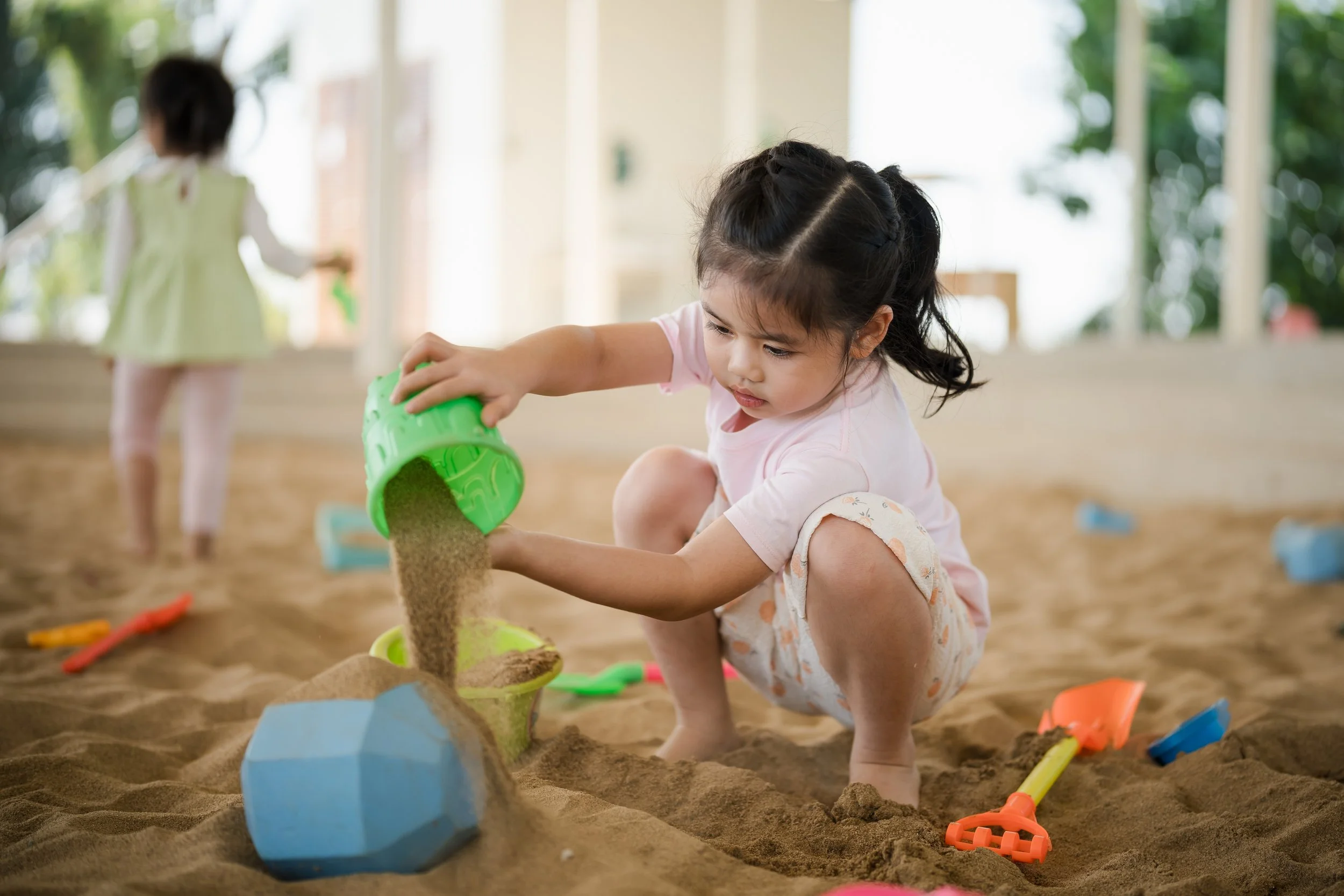
Playing with water, mud, sand, paints and play dough helps them to concentrate – they love to explore mucky, messy things (sensory) - it provides them with the ability to feel what is happening and experience cause they are having (cause and effect) on things and people (their environment) and provides them with multisensory feedback (e.g as the mud slithers through their fingers) which in turn supports their memory. Being outside and doing active physical play – walking, running, jumping, climbing, swinging, sweeping, splashing etc is essential in supporting the underlying physical development and co-ordination that underpins and supports communication and talking.
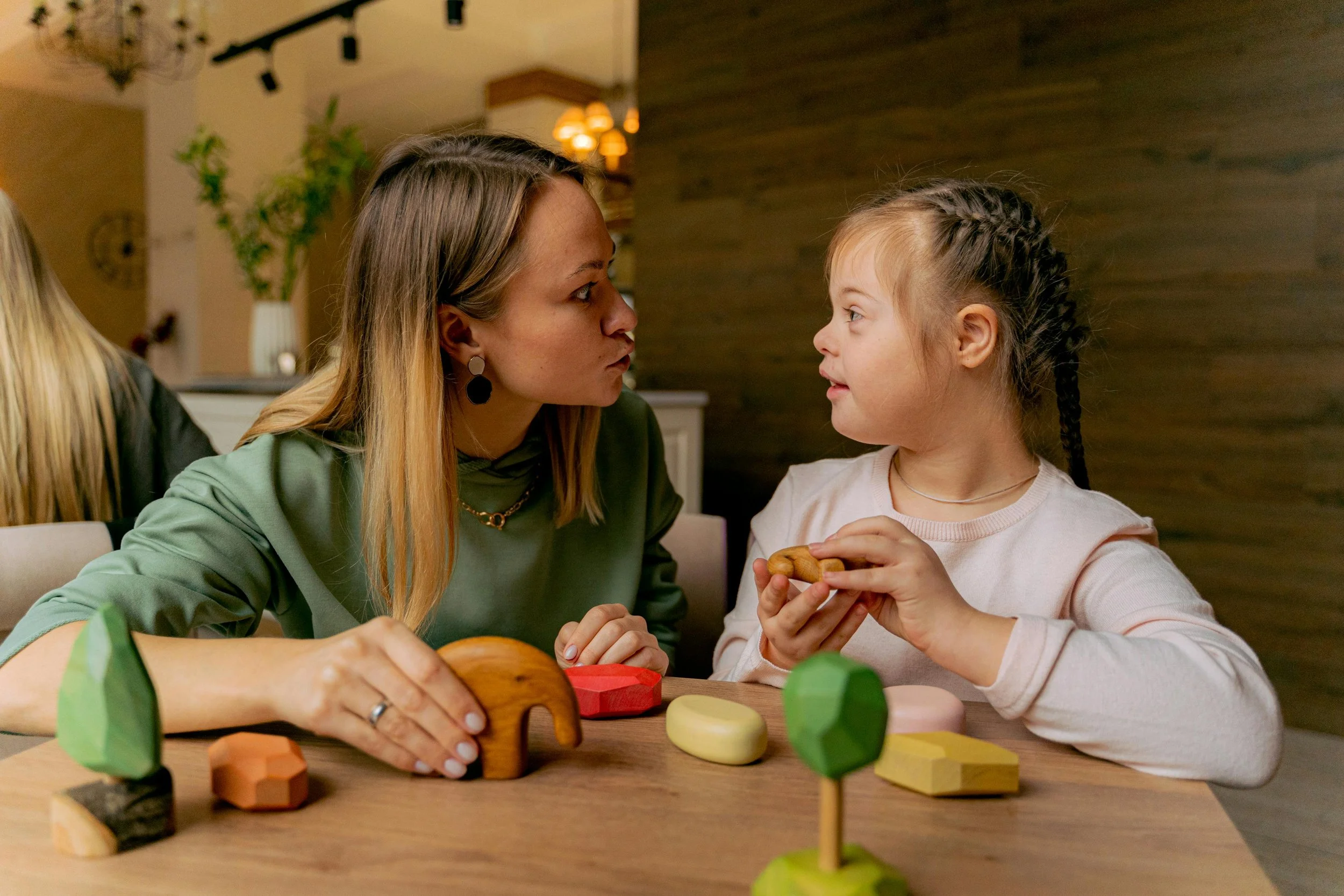
What they do with ‘toys’ and in their ‘play’ actions will often take place before they have any words. They file the memory/image/picture in their head of what they are doing. If the adult names the word when they have the object in their hand and are looking at another persons face as that person gives them a name for the object, they then can file the image and word together in their head giving the word meaning and building up a memory bank of words and vocabulary.
‘Peoples games’, e.g peek a boo games, rough and tumble, tickle games are just the same. Each child face watching, smiling and triggering the adult to smile back, say boo, tickle them, throw them in the air etc. Ready, steady, go games, and action songs are all terrific ways of each child seeing what their actions do to cause the adult to respond, whilst words are said. Each child drinking the sounds and words from the adults face as they laugh together.
Toys, themselves can be handy (why so many nurseries have home corners) because they are mini versions of things that happen at home. When you start to see your child carry out a ‘sequence’ with the toys/props e.g. cuddle teddy/baby, put them to bed, you know that they are starting to prepare their thoughts for a short sequence/combination of words. Usually they will not be able to use the words yet, but they are preparing.
A slightly harder stage is playing in sequences with ‘miniature toys’ e.g. Playmobile, lego etc. These toys are usually representative of things that aren’t present in their everyday environment but are seen/experienced less frequently e.g. outside e.g. Playground, ambulance, zoo etc. They will start to experiment and explore with the things each item does and by watching what they do, you will literally see their thoughts. They will then look to you for vocabulary for these new ideas and will drink the words from your face. When they look away they will be requesting time to carry on with their own ideas, a request for us to stop talking. They may well chat away to themselves (either in gobbled gook or words) i.e. self talk, whilst organising through their actions and what they want to us to say something they will invite us with a face watch .
Of course, children play all the time, running and jumping around and exploring anything and everything which frequently are not ‘toys’.
In VERVE we start with daily ‘quiet times’ and ‘toys’ or peoples games so that we can feel the calm and we can see what each child is thinking through what they do. These quiet times are to help us to also be aware of when to speak and when to stop Quiet times can be carried out anywhere - e.g. bath time, out and about, at the swing park etc. These quiet times then start to influence the rest of our day, with each child enjoying showing us and supporting us in knowing what to do and say and when to do and say it.
There are so many different things we do throughout the day Free-play enables more creative thought and sentences and then there are rule based activities and of course the joy of sharing books. Once we are waiting for our child to face watch, we can apply the same principle to whatever we do, at any point during our day, watching them enjoy and absorb the skills of the new activity as we enjoy and learn from them.
Continued Reading: